FRONTIERS BEYOND BLOG
A Slow Ride Through the Hills: Inside the Darjeeling Himalayan Railway
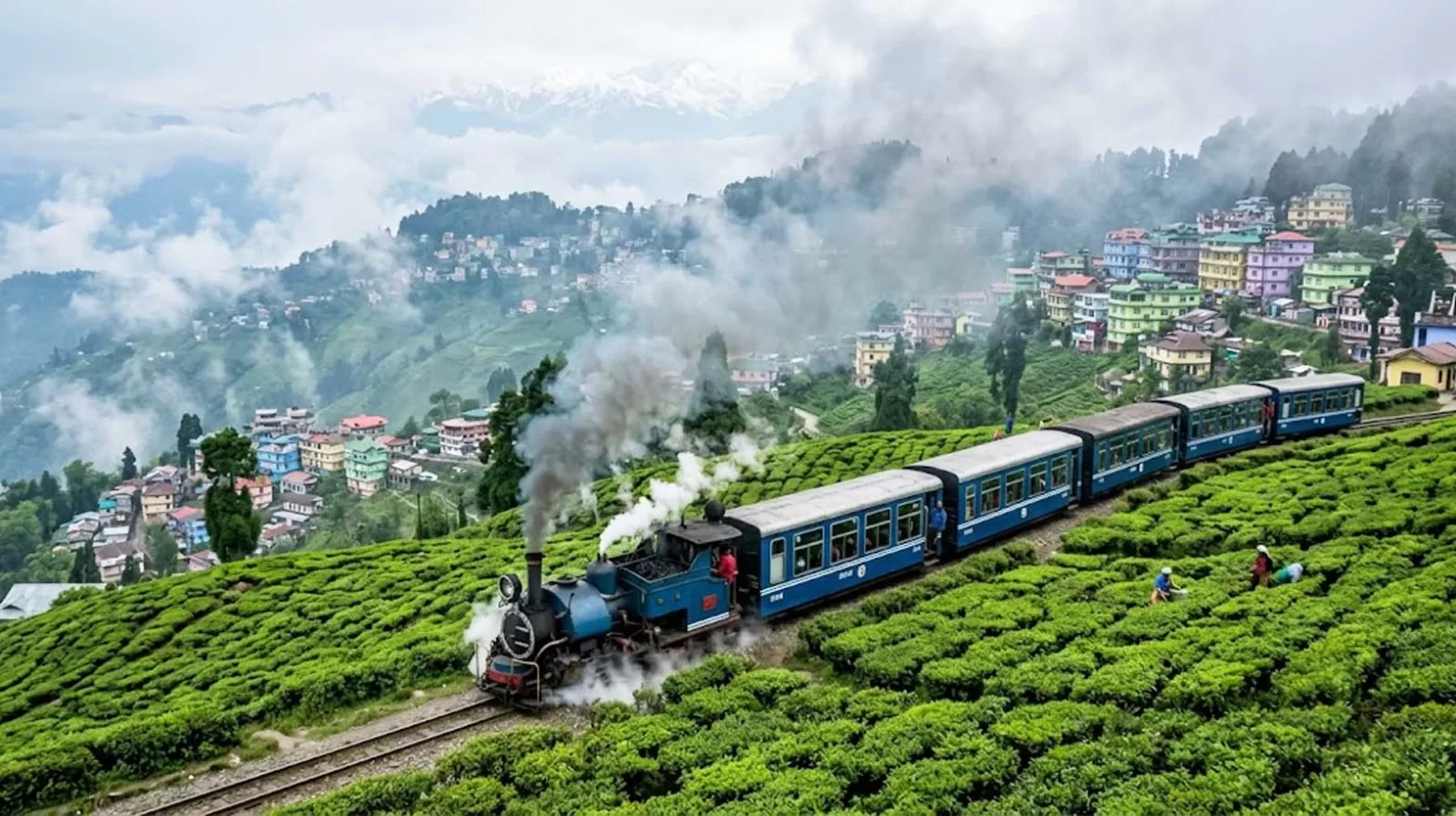
Winding through mist-laden hills, emerald tea gardens, and vibrant mountain towns, the Darjeeling Himalayan Railway is one of India’s most evocative travel experiences. Popularly known as the “Darjeeling Toy Train”, this narrow-gauge railway has been wading through the eastern Himalayas since 1881, connecting North Bengal with the quaint hill station of Darjeeling. More than 144 years later, it still continues to enthral travellers through its timeless rhythm and deep connection with the landscape. It is a living heritage line where history, landscape, and human life intersect at an unhurried pace.
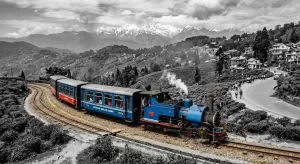
What truly sets this railway apart is the presence of its historic steam engines, which still operate on select routes. As the train moves slowly along the hills, steam drifts across tea estates, whistles echo through valleys, and everyday life pauses briefly to let the train pass. Markets, homes, cafés, and schools exist just inches from the tracks, creating scenes found nowhere else in the world. For travellers who value experiential journeys over checklist tourism, the Darjeeling Himalayan Railway offers something rare: authenticity.
Today, the Darjeeling Himalayan railway is recognized as a UNESCO World Heritage Site. It represents an era when travel was about observation and immersion rather than efficiency, where the journey itself was as rewarding as the destination.
For travellers seeking meaningful experiences in the Himalayas, thoughtfully curated journeys by Frontiers Beyond Pvt Ltd highlight the Darjeeling Himalayan Railway as not just as an attraction, but as an essential part of a deeper Darjeeling story, one best experienced slowly, with time to watch the mountains unfold.
A Short History of the Darjeeling Himalayan Railway
The Darjeeling Himalayan Railway began operations in 1881, during British colonial rule. It aimed to connect the plains of North Bengal to Darjeeling. At the time, Darjeeling had already become a popular summer retreat, but travellers had to undertake long, exhausting journeys on foot by mule to reach Darjeeling.
British engineers felt that instead of carving tunnels through the mountains, a narrow-gauge railway line can be designed. It climbed gradually using loops, curves, and zigzags. This ingenious design allowed trains to negotiate steep gradients without rack-and-pinion systems, making it one of the most remarkable railway feats of its time. In 1999, UNESCO recognized the Darjeeling Himalayan Railway as a World Heritage Site, acknowledging not just its engineering brilliance but its continued use as a living railway woven into everyday life. Both diesel and steam engines operating on a single shared line.
The Steam Engine: The Soul of the Toy Train
While diesel locomotives have taken over most regular services, the steam engine remains the emotional heart of the Darjeeling Himalayan Railway. These compact locomotives, originally built in Britain, were designed specifically for sharp curves and steep climbs.
What makes a steam ride special is not technical complexity, it is atmosphere.
- The rhythmic chuffing as the engine climbs
- Wisps of steam drifting through pine trees
- The whistle signalling villages ahead
- Locals pausing mid-conversation to let the train pass
This is not a journey measured in kilometers per hour. It is measured in moments.
Where You Can Experience Steam Trains Today
Steam locomotives typically operate on short, scenic stretches, most popularly:
- Darjeeling-Ghoom
- Batasia Loop
These segments are perfect for travellers who want the essence of the Toy Train without committing to the full-length journey.
Highlights Along the Toy Train Route
- Batasia Loop
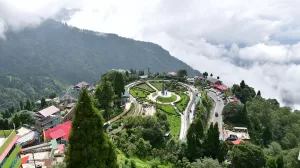
One of the railway’s most famous features, Batasia Loop is both an engineering solution and a scenic marvel. The train completes a full circular loop to gain altitude, offering panoramic views of Darjeeling town and surrounding hills. On clear days, distant Himalayan peaks appear on the horizon, making this a favorite stop for photographers.
- Ghoom Railway Station
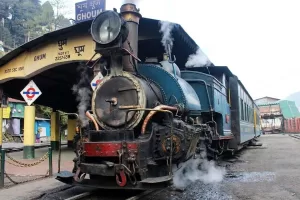
At over 7,400 feet, Ghoom is among the highest railway stations in India. The station houses a small museum showcasing the history of the railway, vintage photographs, and old equipment. The cool mountain air and old-world charm make this stop especially atmospheric.
- Darjeeling Town Section
Perhaps the most surreal stretch is where the train runs directly through Darjeeling’s streets. Shops, homes, cafés, and traffic all pause as the train passes, often at walking speed. Few railways in the world offer such close interaction with urban life.
- Tea Garden Landscapes
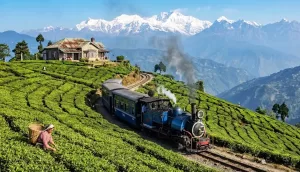
Between towns and stations, the railway glides through tea estates that made Darjeeling world-famous. The slow pace allows travellers to fully appreciate the manicured slopes, estate bungalows, and workers moving gracefully among the tea bushes.
Things to Do While Visiting the Darjeeling Himalayan Railway
A visit to the Darjeeling Himalayan Railway is not limited to simply boarding a train. The railway experience unfolds across stations, viewpoints, streets, and surrounding landscapes, offering travelers multiple ways to engage with its heritage, scenery, and everyday life.
- Take a Steam Engine Joy Ride
The most sought-after experience on the Darjeeling Himalayan Railway is a ride behind a historic steam locomotive. These short heritage journeys, usually between Darjeeling and Ghoom or around the Batasia Loop are designed for slow travel and scenic enjoyment. The emphasis is on atmosphere rather than distance, allowing travellers to enjoy the sound of the engine, drifting steam, and constant interaction with the surroundings.
- Visit Batasia Loop and War Memorial
Batasia Loop is both an engineering highlight and a scenic viewpoint. Visitors can walk around the landscaped garden, watch trains run through the loop, and enjoy wide views of the surrounding hills. The War Memorial within the complex adds a cultural and historical layer to the visit, making this stop more than just a photo point.
- Explore Ghoom Railway Station and Museum
The Ghoom station, one of the highest in India, houses a small but informative railway museum. Here, visitors can see old photographs, scale models, and historical artifacts related to the Toy Train. The station itself, with its old-world architecture and mountain setting, is worth lingering at.
- Experience the Street-Running Sections in Darjeeling
One of the most unusual aspects of the railway is how the train shares space with daily life in Darjeeling town. Standing along these sections allows travellers to witness the train pass through markets, shops, and homes at walking speed, a rare example of railways and urban life coexisting so closely.
- Walk Along Sections of the Track
Certain stretches near Darjeeling and Ghoom are ideal for short walks. These walks offer opportunities to observe railway infrastructure up close, watch trains approach from a distance, and enjoy uninterrupted views of tea gardens and hills. Caution and respect for safety are essential.
- Photography and Videography
The Darjeeling Himalayan Railway is a favourite among photographers. Early mornings often bring mist, while late afternoons offer soft light and dramatic contrasts. Steam engines against tea estates, mountain backdrops, and townscapes create compelling visuals throughout the day.
- Combine the Railway with Tea Estate Visits
Many tea gardens lie close to the railway line. Pairing a Toy Train experience with a guided tea estate visit offers insight into Darjeeling’s most famous industry and enhances understanding of the landscapes the railway travels through.
- Relax at Cafés Near the Tracks
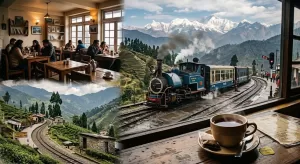
Several cafés and viewpoints along the route offer seating overlooking the railway. Sitting with a cup of Darjeeling tea while a train passes by is a simple but memorable way to absorb the atmosphere without rushing.
Best Time to Visit the Darjeeling Himalayan Railway
- March to May-This season offers pleasant temperatures, clearer skies, blooming landscapes.
- October to November- This season offers crisp air, excellent visibility, and is ideal for photography.
How to Reach the Darjeeling Himalayan Railway
- By Air
The nearest airport is Bagdogra Airport, approximately 70 km from Darjeeling. From here, travelers can hire a cab to reach Darjeeling or New Jalpaiguri.
- By Train
New Jalpaiguri (NJP) is the primary broad-gauge station connecting major Indian cities. From NJP, travelers can:
- Board the Toy Train for a full-length scenic journey (long but immersive)
- Travel by road to Darjeeling and opt for a shorter steam ride
- By Road
Darjeeling is well connected by road from Siliguri. The drive takes around 3-4 hours, depending on traffic and weather.
The Role of the Railway in Local Life
For locals, the Darjeeling Himalayan Railway is more than a tourist attraction, it is part of daily rhythm. It has historically carried mail, goods, schoolchildren, and workers. Even today, its presence shapes town layouts, business locations, and social interactions.
The railway workshops and stations also provide livelihoods, preserving skills that have been passed down generations. Steam operations, though limited, support heritage conservation and regional tourism.
Why the Steam Engine Experience Still Matters
In an age dominated by speed and efficiency, the steam engine represents a different philosophy of travel.
- It encourages observation over consumption
- It turns movement into storytelling
- It transforms landscape into lived experience
This is why travellers often describe a Toy Train ride as emotional rather than merely scenic.
Conclusion
Travelling to the Darjeeling Himalayan Railway is not just about checking off a UNESCO site from travel bucket lists. It is about experiencing travel as it once was, slow, immersive, and deeply connected to place. The steam engine, with its gentle pace and old-world charm, invites travellers to pause, look around, and feel the Himalayas rather than rush through them. In a world increasingly obsessed with speed, this tiny train continues to teach a powerful lesson: sometimes, the most meaningful journeys are the slowest ones. If you are someone who is seeking heritage, landscape, and narrative all woven into one unforgettable experience, the Darjeeling Himalayan Railway is a must-visit site.
Plan Your Himalayan Rail Journey with Frontiers Beyond
Experiencing the Darjeeling Himalayan Railway is most rewarding when it is thoughtfully planned around the right season, timings, and local insights. Frontiers Beyond Pvt Ltd specializes in crafting slow, experience-led journeys that weave the Toy Train’s steam heritage with tea estates, hill walks, and Darjeeling’s cultural life. Whether you are seeking a short steam joy ride or a deeper heritage-focused Himalayan itinerary, Frontiers Beyond helps turn a classic rail journey into a meaningful travel story.