FRONTIERS BEYOND BLOG
Drifting Through Paradise: Discover the Enchanting Backwaters of Alappuzha
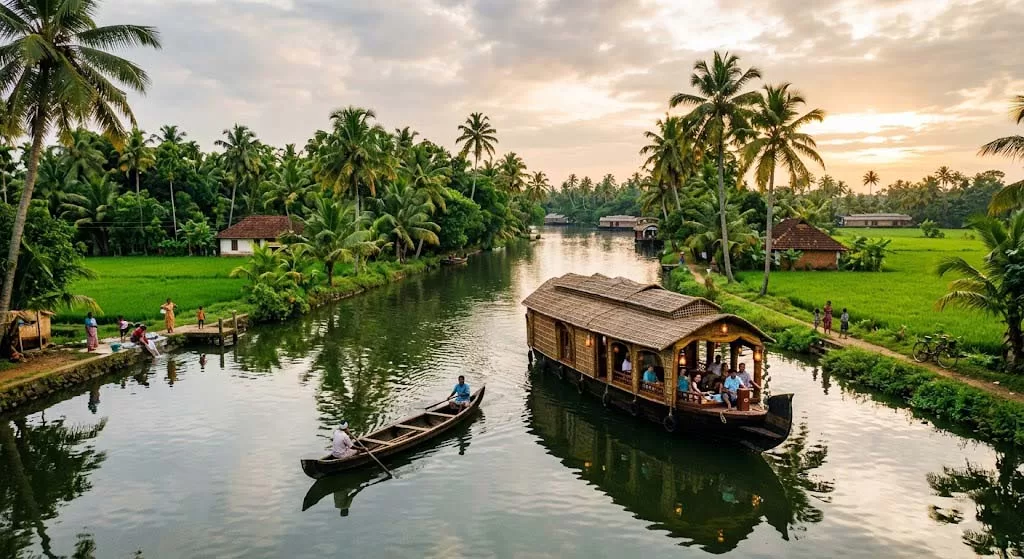
Nestled in the deep reaches of Kerala is a world where boats glide dreamily on tranquil waters. Here time stands still and the life unfolds amongst the lush paddy fields and swaying palms. Welcome to Alappuzha, also known as Aleppy. Bordered by the emerald coastline of Kerala, this small town is home to lush backwaters, where air carries the scent of coconut trees. Often called the “Venice of the East”, this town offers more than scenic beauty-it is a living tapestry of culture, craftsmanship, and harmony with nature.
The origins of the town can be traced back to the late 18th century when Raja Keshawadas, the Diwan of Travancore, envisioned a planned port town to boost Kerala’s maritime trade. The town slowly emerged as a bustling port city connecting traders from Greece, Rome, and the Arab world soon evolved into a vibrant settlement famous for its coir industry, spice trade, and inland waterways. The intricate canal network was a system that still defines the town’s identity today. Modern-day Alleppey is a harmonious blend of old-world charm and quiet modernity. The town’s rhythm is guided by the ebb and flow of the tides and the timeless routines of its people-fishermen setting out at dawn, women weaving coir ropes along the banks, and children waving at passing boats.

For travellers seeking an experience that blends serenity with nature, the backwaters of Alleppey are not just a destination, but a revelation. The town’s strategic location along the Arabian Sea and its proximity to the expansive Vembanad Lake make it a prime destination for backwater tourism. Let’s explore this dreamscape with Frontiers Beyond.
Understanding the Backwaters of Alleppey
The backwaters of Alleppey are the soul of Kerala’s natural and cultural fabric. The mesmerizing network of lagoons, lakes, rivers and canals that meander through the lush coconut groves and fields of rice and paddies. This intricate system of water bodies stretches for over 900 kilometres, forming a network that sustains both the human and ecological life of the region. The most prominent water body amongst these is the Vembanad Lake, India’s longest lake, whose vast expanse reflects both the sky and the rhythm of Kerala’s daily life.
The backwaters are also responsible for sustaining Kuttanad, famously known as the “Rice Bowl of Kerala.” It is one of the few places in the world where farming is practiced below sea level. Ingenious dykes and bunds hold back the brackish water, allowing farmers to cultivate rich, green paddy fields that supply the entire country with rice.

The backwaters are also important from the perspective of biodiversity. They nurture countless species of birds-from elegant egrets and kingfishers to migratory ducks that arrive in winter. The mangroves along the banks act as natural barriers against erosion while providing refuge to aquatic life. It’s an ecosystem that balances delicately between land and water, sustaining both human livelihood and natural harmony.
For travellers, the backwaters represent a rare convergence of nature and culture-a floating world where every curve of the canal reveals a new story. The slow-moving boats pass through scenes that feel almost cinematic: fishermen casting their nets in silhouette against the sunrise, women washing brass utensils at the steps of their homes, and children waving enthusiastically from palm-fringed banks. In essence, Alleppey’s backwaters are not just a geographical marvel-they are a living heritage, a testament to Kerala’s enduring connection with water, resilience, and serenity.
How to Explore the Backwaters of Alleppey and Beyond
Exploring the backwaters of Alleppey is not just an act of sight-seeing, it is surrendering to the slow rhythm of nature as it unfolds in daily life. Each mode of backwaters exploration offers a different perspective of this liquid paradise, whether you drift in luxury on a houseboat, paddle soundlessly in a shikara, each mode of exploration offers a different perspective of this liquid landscape, whether you drift in luxury on a houseboat, paddle quietly through narrow canals in a canoe, or witness local life from the banks. It is important to experience Alleppey through its many layers- natural, cultural, and emotional.
- Houseboat Cruises: The Floating Palaces of Kerala
The quintessential experience of Alleppey begins atop the traditional Kettuvallam, or houseboat. It is a grand structure which is shaped like a floating cottage. Historically, it was used to transport rice and spices across the waterways network of Kerala. Today, these houseboats have been transformed into luxurious floating resorts, replete with bedrooms, sundecks, lounges, and even onboard kitchens. The modern Kettuvallams are elegant structures that are designed using coir ropes, bamboo thatching, and polished wooden hulls. To suit the needs of travellers, they are furnished with modern amenities like air-conditioning, ensuite bathrooms, and fine dining. Most cruises start from Alleppey boat jetty or Finishing Point, with popular routes winding through Vembanad Lake, Punnamada Lake, and the narrow canals of Kainakary and Nedumudy. A day cruise offers a glimpse of life on the water.
- Canoe and Shikara Rides: A Glimpse of Local Life
If you want to explore the soul of Kerala and its backwaters, then canoe and shikara rides are a must-try. These slender, wooden boats meander through the serpentine network of the waterways, where large houseboats cannot pass. Canoe and shikaras ensure that travelers can glide past tiny hamlets, toddy shops, and paddy fields at a touching distance, getting a close glimpse of the daily life of the area. The canoe rides immerses people directly into the rhythm of the daily lives of the people, the gentle splash of the oars, the aroma of freshly steamed fish from riverside kitchens, and the melodious chatter of the villagers is a sight to behold. For photographers and culture enthusiasts, these rides offer some of the most authentic, unscripted moments of Kerala’s life on water.

- Backwater Villages: Listen to the Heartbeat of Alleppey
The real magic of the backwaters lie in its villages, where time appears to glide slowly. Kuttanad is renowned across the world for its below sea-level paddy cultivation. It is an engineering marvel and a cultural treasure. Travellers are recommended to embark on cycling and walking tours of the area. The embankments and its nearby areas offer a sight of the lush fields, coconut trees mirrored in the canals, and farmers at work knee-deep in the mud. Visitors can also explore Pathiramanal Island, nearby the Vembanad Lake that serves as a birdwatcher’s paradise. It’s home to over 90 species of local and migratory birds, including herons, terns, and cormorants. Early morning or late afternoon visits reward travelers with the sight of hundreds of birds taking flight over glistening waters. In the nearby village of Champakulam, travelers can visit the historic Champakulam Church-one of the oldest in Kerala. They can also watch the craftsmen who build traditional snake boats (Chundan Vallams).

- The Legendary Nehru Trophy Boat Race
The highlight of the Alleppey backwaters is the Nehru Trophy Boat Race. It is held every year in the month of August. It is a spectacle that transforms the calm waters into a stage of energy, music and competition. Teams of over a hundred oarsmen, row in perfect rhythm to the beats of drums and the chants of thousands of cheering spectators. The atmosphere is electric, perfect for thrill and adventure seekers. The event commemorates Pandit Jawaharlal Nehru’s 1952 visit to Alleppey, when he was so captivated by a snake boat race that he donated a trophy to the winners. Today, the race has evolved into one of India’s most thrilling cultural events, drawing visitors from across the globe. For those planning a visit in August or early September, booking well through Frontiers Beyond Tours Pvt. Ltd. ensures prime viewing spots and curated local experiences.
- Beyond the Backwaters: What Else to Explore in Alleppey
While the star attraction of Alleppey is its backwaters, its charm extends beyond its waterways. The town itself offers a blend of heritage, spirituality, and coastal beauty that deepens the traveller’s experience.
- Alleppey Beach: The beach is known for its historic pier that was built in 1862, it offers golden sands and fiery sunsets that paint the horizon in the hues of orange and red. Early mornings bring fishermen and colorful boats, while evenings are perfect for quiet strolls by the sea.
- Marari Beach: Marari beach is located just 11 km from Alleppey, Marari is a tranquil stretch of coastline that remains relatively untouched by mass tourism. Coconut palms fringe the shore, and waves crash softly on golden sand, the place is ideal for those seeking serenity and luxury resorts with Ayurvedic spas.
- Krishnapuram Palace: The palace is at a short distance from Alleppey. It is an18th-century palace that showcases Kerala’s traditional architecture and houses the Gajendra Moksham mural, one of the largest wall paintings in the state. The palace’s elegant courtyards and museum offer a glimpse into the region’s royal and artistic past.
Together, these sites paint a fuller picture of Alleppey-a place where nature, heritage, and devotion coexist.
Best Time to Visit Alleppey
Alleppey’s tropical climate makes it a year-round destination, but each season offers a distinct charm.
- Winter (November to February): This is the peak travel season- humidity is low, and temperatures range between 18°C and 30°C. The skies are clear, perfect for houseboat cruises, sightseeing, and photography. Festivals like Christmas, New Year, and local temple fairs add a festive rhythm to the calm waters.
- Monsoon (June to September): The backwaters during monsoon turn into an ethereal spectacle. The misty skies, lush greenery, and rain-kissed canals make it the perfect time for travel. This time is perfect for budget-friendly travel, as houseboat tariffs drop. This season also transforms the landscape into a photographer’s paradise.
- Summer (March to May): Summers are hot and humid, with temperatures touching 35°C. However, early mornings and late evenings still offer pleasant hours for short cruises or village walks. Travelers looking for quieter, less crowded experiences will find good deals during this period.
How to Reach Alleppey
Alleppey is well-connected by air, road, and rail, making it easily accessible from major Indian cities.
- By Air: The nearest airport is Cochin International Airport (COK). From there, travellers can hire private cabs or book transfers through Frontiers Beyond Tours Pvt. Ltd. for a scenic two-hour drive to the backwaters.
- By Train: Alappuzha Railway Station lies on the main line connecting Kochi and Thiruvananthapuram. Daily trains from major cities like Chennai, Bengaluru, and Mumbai make rail travel both affordable and convenient.
- By Road: The NH66 connects Alleppey to Kochi, Kollam, and Trivandrum. Kerala State Transport buses and private vehicles regularly ply these routes.
- By Water: State-run ferry services from Kollam to Alleppey, an 8-hour journey through the backwaters are among India’s most scenic water routes.
Tips for Travellers
1. Book in Advance: If you plan to travel during peak months (December–January), book your houseboat early to get the best options.
2. Choose the Right Houseboat: Go for overnight cruises instead of short ones, you’ll enjoy both sunset and sunrise on the water. Check that the boat is clean, safe, and eco-friendly.
3. Pack Light-Wear comfortable cotton clothes, carry sunscreen, mosquito repellent, sunglasses, and a hat. A light raincoat can come in handy if you’re visiting in monsoon.
4. Stay Hydrated and Eat Safe-Drink only bottled or filtered water. Try local Kerala food like fish curry, appam, and karimeen, but avoid raw or unhygienic street food.
5. Respect Local Culture: Dress modestly when visiting temples or villages. Always ask before taking photos of locals.
6. Travel Sustainably and responsibly: Don’t throw plastic or waste into the canals. Choose operators that care for the environment and local communities.
7. Carry Cash: ATMs are available in town, but small shops or ferry rides may not accept cards.
8. Safety First: Always wear a life jacket on small boats and keep valuables secure. Avoid leaning over the railings.
Conclusion
Alleppey is not merely a destination, it is an experience of a lifetime. Its backwaters reflect more than just the beauty of Kerala. As boats drift through mirror-like canals, every ripple tells a story. Here, nature and humanity exist in quiet harmony. Every sunrise brings with it the golden shimmer of Vembanad Lake, and every sunset leaves a trail of calm on the water’s surface. Whether you choose to unwind on a luxurious houseboat, explore the narrow lanes of a backwater village, Alleppey invites you to pause, breathe, and belong.
Embark on the Journey with Frontiers Beyond Tours Pvt. Ltd.
At Frontiers Beyond Tours Pvt. Ltd, travel is about creating stories that linger for a lifetime. Our meticulously crafted Kerala itinerary lets you discover Alleppey the way it was meant to be-slow, authentic, and unforgettable. From luxury houseboat stays to canoe rides through hidden canals, every itinerary is crafted with precision, comfort, and care. With our local expertise and sustainable approach, you don’t just visit the backwaters-you live their rhythm.
Visit www.frontiersbeyond.com to plan your dream Kerala escape today.