FRONTIERS BEYOND BLOG
Prayagraj Magh Mela 2026: The Ultimate Traveller’s Guide to India’s Great Winter Pilgrimage
Introduction
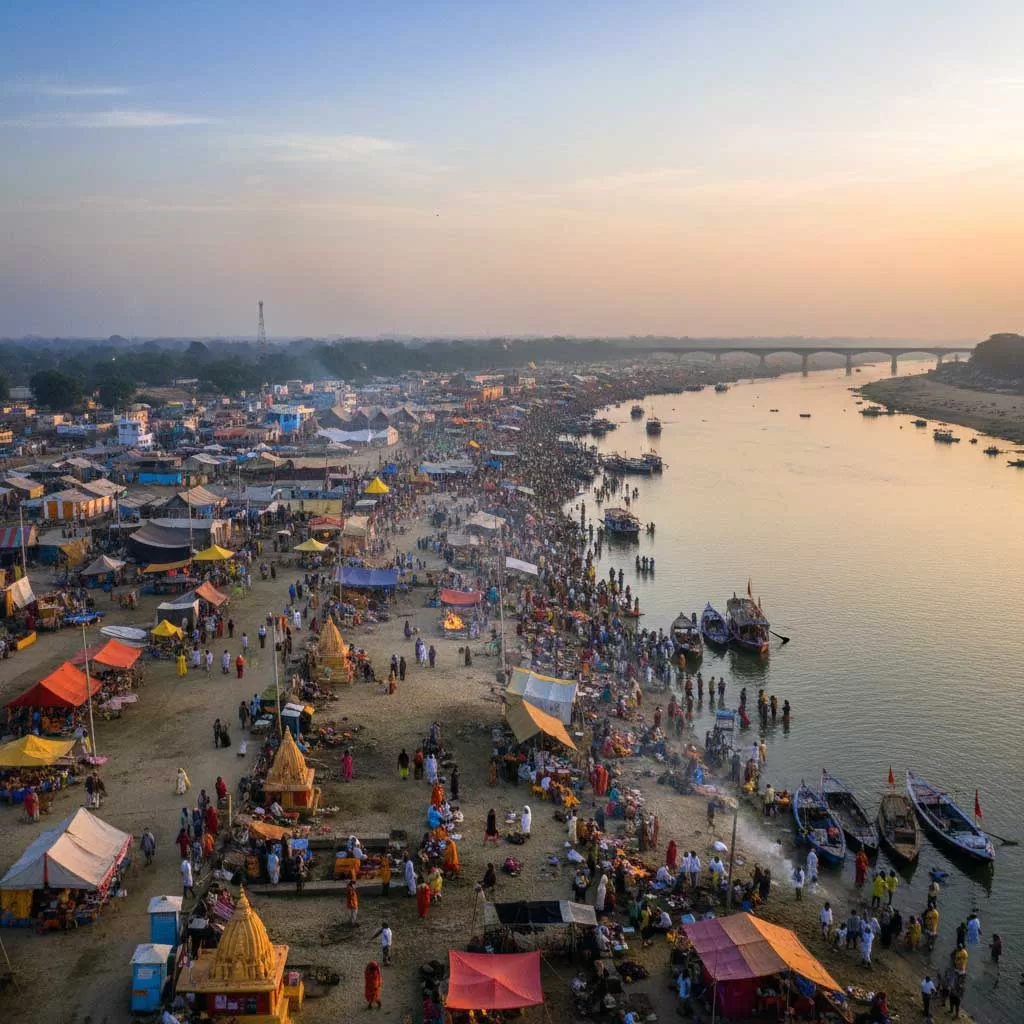
In the early weeks of January, the pilgrim city of Prayagraj undergoes one of the most striking seasonal transformations in the country. On the banks of the Triveni Sangam—the meeting point of the Ganga, Yamuna, and the elusive Saraswati-a full ritual landscape unfolds. The floodplains of the Sangam are transformed into roads, bridges, akhara zones, camps, and bathing ghats designed to receive millions of visitors. This is the Magh Mela, slated to be held from 3 January to 15 February 2026 in Prayagraj, Uttar Pradesh. The mela commences with the ceremonial bath of Paush Purnima and moving through a series of high-energy bathing days such as Makar Sankranti, Mauni Amavasya, Basant Panchami, and Maghi Purnima, before concluding on Mahashivratri. The grand celebration revolves around major ritual days such as Makar Sankranti and Mauni Amavasya, the Mela is a structured, and meticulously coordinated fusion of faith and culture. The atmosphere is spiritually charged, brass lamps glowing through thick mist, conch shells resonating in the cold air, and continuous movement of devotees toward the river. It is a festival rooted in mythology, ritual discipline, ascetic traditions, and river worship, carrying forward a lineage of devotion that has endured for over two millennia.
What Is Magh Mela- Origins and Significance
Prayagraj has always occupied a crucial position in the Hindu scriptures, famously known as Tirtharaj, the “king of pilgrimage sites,” It is said that during Samudra Manthan, a cosmic event where Gods and Demons (Asuras) together participated in the churning of the cosmic ocean in search of amrita (nectar of immortality). Religious scriptures note that drops of this nectar fell on four earthly locations, including the Triveni Sangam. Ever since, Prayagraj has been known as a site of extraordinary spiritual potency. It is believed that the ritual of bathing in Sangam can purify one’s karma, paving way for their liberation.
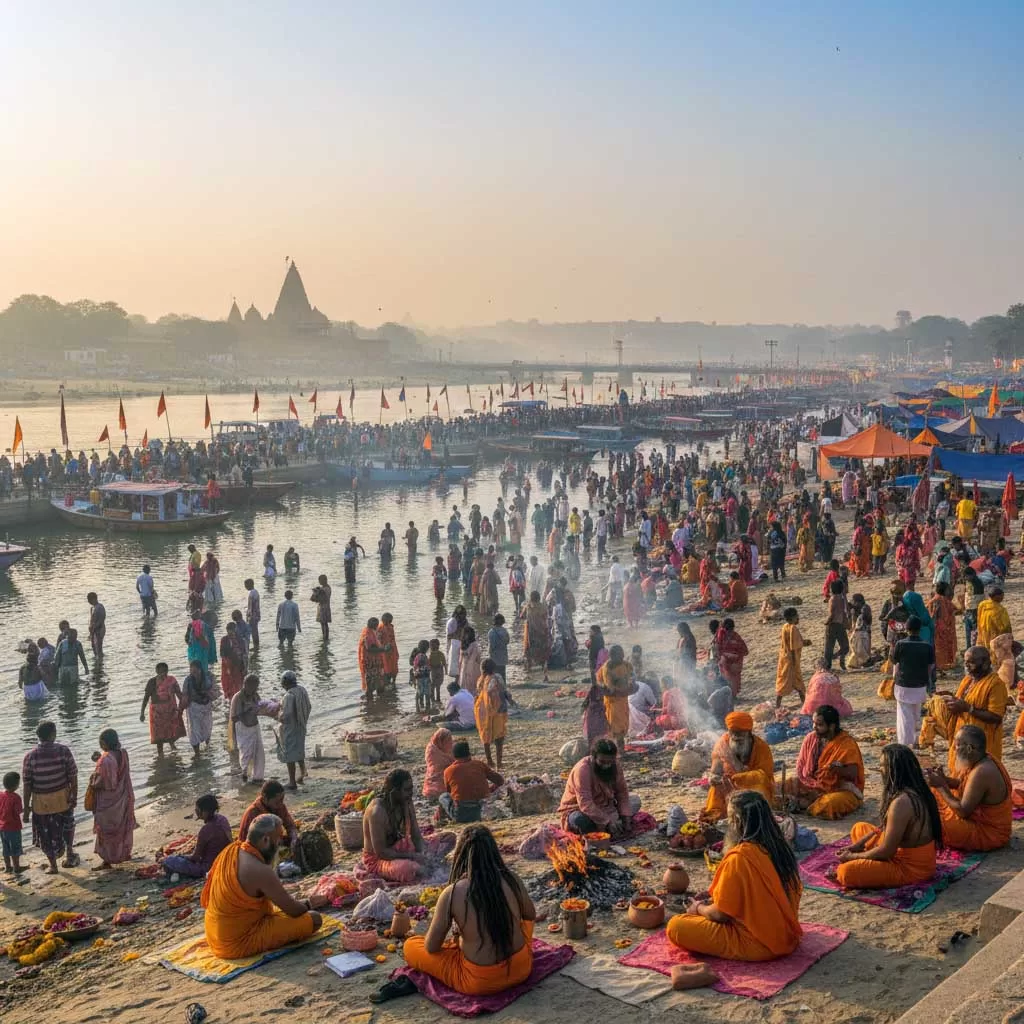
Gradually, this pilgrimage evolved into an annual ritual event shaped by several ascetic orders. An intriguing element of the Magh Mela is the tradition of Kalpvas- an ancient month-long spiritual practice observed by devotees who commit to living by the Sangam for the entire month of Magh. They follow a strict regimen of daily ritual bathing at sunrise, simple living in temporary camps, meditation, scripture recitation, fasting, and acts of charity. Practitioners view the month as a period of purification and internal reset, undertaken to cleanse past karmas, deepen discipline, and move closer to spiritual clarity. Historically, Kalpvasis formed the backbone of the Magh Mela. Today, Magh Mela has emerged as one of the world’s longest-running cultural events, merging ritual bathing, Kalpvas, akhara participation, discourse, and the continuous flow of pilgrims into the confluence.
 Magh Mela 2026 Dates and Snan Schedule
Here are the official ritual dates for Magh Mela 2026:
1. Paush Purnima (3 January, 2026)-Beginning of Kalpvas and the first major bath.
2. Makar Sankranti (14 January, 2026)- Sun transitions to Capricorn; a highly auspicious bathing day.
3. Mauni Amavasya (18 January, 2026)-The most important and crowded snan of the entire festival.
4. Basant Panchami (23 January, 2026)-Signaling the onset of spring.
5. Maghi Purnima (1 February, 2026)-Significant for the completion of Kalpvas vows.
6. Mahashivratri (15 February, 2026) Final ritual day, marking the official end of the Mela.
Things to Do at Magh Mela 2026
1. Witness the Early Morning Snan at the Triveni Sangam
The early morning ritual bath (snan) is one of the most defining and auspicious rituals of the Magh Mela. At dawn, you can witness devotees perform the early morning dip (holy snan). People carry brass lotas, priests prepare ritual offerings, and hundreds gather in disciplined lines along designated ghats. When the first rays of the sun hit the river, thousands step into the water with a coordinated sense of purpose- the act of taking the bath which is believed to purify karmic burdens and reset the spiritual balance. On auspicious days like Mauni Amavasya (18 January 2026), the energy is dramatic and infectious. Akhara members enter the river in ritual formations, drums echo across the Sangam and the sight of lakhs of devotees performing the same act creates a sight rarely seen anywhere else. Even for observers who do not enter the water, the combination of ritual choreography, river symbolism, and mass participation forms an unforgettable visual and cultural experience.
 2. Walk Through Kalpvas Camps and Observe Riverbank Monastic Life
The Kalpvas camps are the heartbeat of the Magh Mela. These camps are spread across large zones of the riverbank where thousands of Kalpvasis live for entire month. The atmosphere of these camps is serene and calm, reverberating with spiritual energy. As dawn sets in, lamps are lit, devotional recitations begin, and groups move silently toward the river for their daily snan. Walking through these camps, you will see
1. small tents arranged neatly in rows
2. communal kitchens where meals are cooked on wood-fired chulhas
3. scripture-reading circles where elders narrate sacred texts
4. slow, rhythmic chanting extending into the afternoon
5. kalpvasis performing charity-distributing food, blankets, or warm tea
Engaging respectfully with Kalpavasis often provides rare insights into personal vows, family traditions, and the reasons why individuals return year after year. For travellers seeking a deeper understanding of the Mela’s quieter side, this is one of the most meaningful experiences.
3. Observe Akhara Processions and Ritual Orders
Akhāras are monastic orders governed by old traditions of ritual discipline, philosophical debate, and ascetic training. Akharas take the ceremonial dip, also known as the Shahi Snan, symbolizing their role as the custodians of Sanatan Dharma. Each akhāra is governed by a structured system led by Mahamandaleshwars and Acharyas, with layers of senior sadhus and disciples who undergo philosophical study, austerity, and service. The akharas at Magh Mrla are as follows:
 1. Akharas belonging to Shaiva orders such as Juna and Mahanirvani, which emphasize renunciation, yogic practice, and in some cases martial traditions;
2. Vaishnava orders like Nirvani Ani and Nirmohi, rooted in bhakti and scriptural learning.
3. Udasin or Nirmal orders linked to Guru Nanak’s lineage and focused on meditation and Vedantic teaching.
During the Mela, Akharas host several camps that serve as centers for debate, rituals, initiation ceremonies, discourses, and guru–shishya interactions. The Naga Sadhus, often photographed, are a Shaiva ascetic wing trained in extreme austerities, not a separate community. Devotees can visit akhāra camps for darshan, guidance, blessings, initiation, and deeper spiritual learning
4. Attend the Evening Aarti at the Sangam
As the evening sets, the Sangam transforms into the site of a glowing ritual. Priests stand in structured rows, lifting large brass lamps while the sound of conch shells, bells, and drums fill the air with rhythmic sound. The ceremony is precise ritual designed to honour the sacred rivers and acknowledge their significance as sources of life, purification, and continuity. For travellers, attending the evening aarti offers the opportunity to reflect on the intense energy of the sangam. The environment is calmer, the crowds are more spread out, and the ritual sequence is easier to observe.
5. Explore the Cultural Bazaars and Traditional Food Stalls
The Mela’s bazaars function as cultural spots that are positioned across major routes and contain a mix of items. Visitors can expect to find:
1. rudraksha malas and other devotional beads
2. brass vessels used for ritual offerings
3. woolen sweaters, shawls, and caps made by local artisans
4. herbal powders, incense, and natural oils
5. traditional winter sweets such as gajak, rewri, and til laddoos
6. puffed rice, chhole-puri, and hot jalebis prepared in makeshift kitchens
The bazaar environment reflects both ancient trade patterns and modern customs, small-scale vendors, family-run shops, and artisan communities all operating side by side. For travellers, this is an ideal space to observe regional culture.
6. Experience the Magh Mela at Night
Nighttime at the Magh Mela offers a vastly different atmosphere from the daytime bustle. As temperatures drop and fog thickens, visibility decreases to a few metres. LED floodlights cast diffused halos through the mist, creating a surreal landscape where structures, tents, and people appear and disappear unpredictably. The soundscape changes too—fewer loud announcements, more distant drumbeats, occasional chanting from Kalpvas camps, and the muffled movement of pilgrims still making their way toward the river.
For photographers, researchers, and culturally curious travellers, night walks reveal the Mela’s transitional states—the quieter pathways, the reflective moods of pilgrims, the subtle glow of lamps, and the stark contrast between illuminated ritual zones and dark, fog-covered open areas. This is where the festival’s mythic undertone becomes most apparent, not through spectacle but through atmosphere and sensory depth.
Best Time to Visit Magh Mela 2026
1. 3–15 January-Ideal for exploration and photography.
2. 14–23 January-Peak crowd and peak ritual period.
3. Late January–Early February-Balanced, calm, and ideal for cultural interaction.
4. 1–15 February-Reflective closing phase with a consistent but manageable footfall.
Travel Tips for Magh Mela 2026
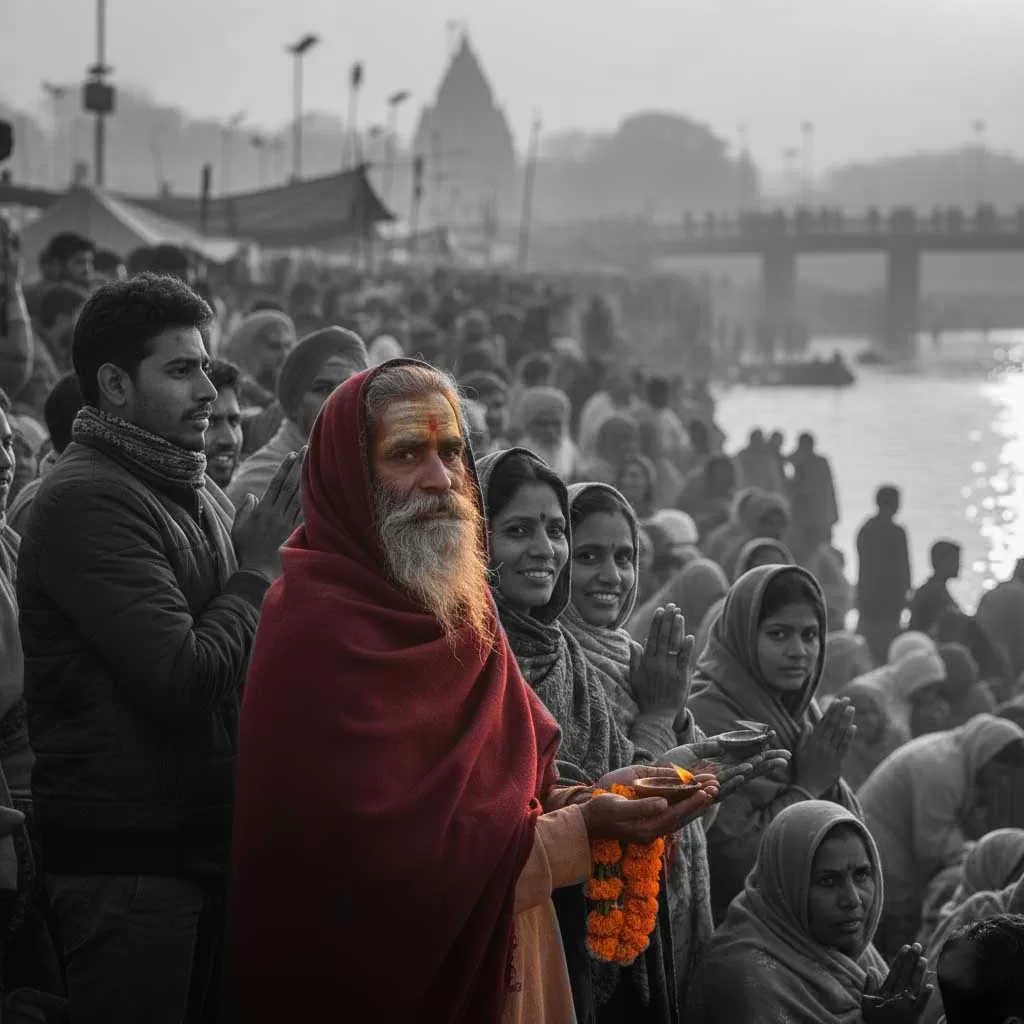 1. Clothing & Essentials: Carry heavy woolens, waterproof sandals, dry spare clothes, and waterproof pouches.
2. Health & Hygiene: Drink only packaged water, eat freshly cooked food, keep ORS and basic medicines with you, and use masks if you’re sensitive to fog.
3. Safety & Navigation: Follow marked corridors, avoid dense clusters, stay behind barricades, and be aware of nearby medical posts.
4. Photography Etiquette: Take portraits only with permission, avoid photographing women bathing, and maintain distance during rituals.
5. Cultural Sensitivity: Dress modestly, do not interrupt meditation or discourses, and keep silent in prayer zones.
6. Group Coordination: Decide fixed meeting points, maintain an offline contact list, and avoid deep zones during peak snan timings.
Experience Magh Mela with Frontiers Beyond
Experience Magh Mela 2026 the right way with Frontiers Beyond, your expert gateway to the festival’s most sacred and culturally layered moments. Gain guided access during major snans, understand the meaning behind complex rituals and akhara traditions, and witness the Mela from safe, strategically chosen vantage points ideal for photography. Explore Kalpvas zones through immersive cultural walks, navigate the vast festival grounds with on-ground assistance, and engage with the Mela’s spiritual, historical, and ritual depth with clarity instead of confusion.
Travel With Insight, Travel with Frontiers Beyond.
Book your Magh Mela 2026 journey with Frontiers Beyond and discover India’s greatest winter pilgrimage with unmatched expert support.