FRONTIERS BEYOND BLOG
Dance to The Drumbeat of Heritage: A Traveler’s Guide to Hornbill Festival 2025
Cradled in the northeastern corner of India, Nagaland is the mist-laden land of serene valleys, vibrant culture, scrumptious delicacies and deeply rooted tribal heritage. It is home to seventeen indigenous tribes, each with its own language, customs, and vibrant attire. Nagaland has always intrigued and attracted the rest of the country. The Naga people are known for their warrior spirit and unmatched hospitality, which together form the soul of this state.
One of the major celebrations of the state is the Hornbill Festival, held between 1-10th December every year. Known as the “Festival of Festivals”, the Hornbill Festival not only seeks to preserve the ancient customs of the Naga culture but also provides an insight into indigenous culture, making it a must-visit for travellers seeking authenticity, adventure, and the rhythmic heartbeat of India. It is held at Kisama Heritage Village near Kohima. The festival brings together all the tribes of Nagaland on one platform. It offers visitors an immersive experience of Naga life-through music, dance, food, handloom, sports, and traditional rituals. If you are planning to witness hidden and offbeat gems of Indian culture, then pack your bags and head to the Hornbill Festival! For those looking to make the most of their trip, Frontiers Beyond offers expert-guided itineraries, local connections, and curated experiences to ensure you explore every corner of the festival with ease.
 Origins of the Hornbill Festival
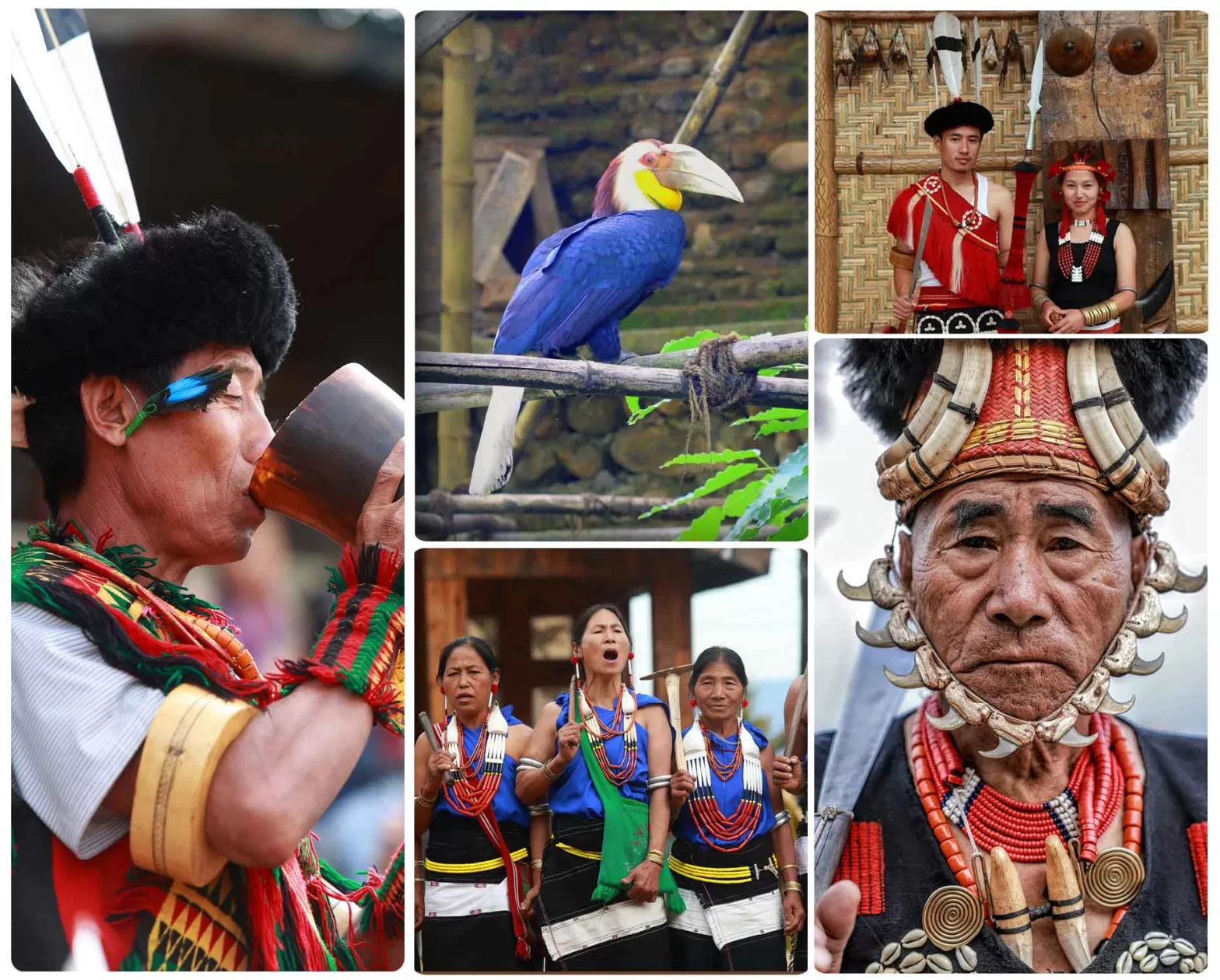
The idea of this festival was conceived in the year 2000. It was named after the Hornbill bird, a species which is deeply revered in the Naga culture. Hornbill is a powerful cultural and spiritual symbol in Nagaland. It is believed to represent bravery as many tribal warriors once wore hornbill feathers on their headgear as a mark of courage and social status. In Naga folklore, the hornbill is believed to be a divine messenger between humans and the spirit world, symbolizing the link between heavens and the mortal realm. All of the tribes of Nagaland respect the Hornbill, hence it was unanimously chosen as the emblem of shared respect and communitarian harmony between the people of the state. The venue, Kisama Heritage Village, was built specifically for the festival. “Kisama” is a blend of the names of two nearby villages, Kigwema and Phesama, which contributed the land.
The Heartbeat of Hornbill-What Happens Here
The Hornbill Festival is not just a celebration, it is a living archive of the rich and diverse culture of the Naga people. Every tribe showcases its customs, music, dance and crafts on a shared platform in the Kisama village.
- Morung Huts
One of the most distinctive experiences at the festival is seventeen Morung huts, each representing a tribe of the state. Morungs were considered to be institutions where young men learned about community values, warfare, folklore, and craftsmanship under the guidance of elder members of the community. Each hut is a a knowledge centers of the distinct culture of a tribe. The huts are built using indigenous materials such as bamboo, wood, cane, and thatch, without modern tools. Each hut acts as a living archive of the tribe which it represents.

Inside, you’ll find traditional weapons, bamboo crafts, handwoven shawls, wood carvings, and ceremonial artifacts that reflect the tribe’s traditions. The people of that tribe occupy the hut during the festival, cooking local dishes, brewing rice beer, and performing their songs and dances around the premises. Visitors are welcomed inside these huts to interact with them, share food, listen to folktales, and even joining in folk songs. Travelers can leverage services from Frontiers Beyond to gain exclusive access to these Morung huts, interact with artisans, and experience the behind-the-scenes of the festival through guided tours.
- Dance Performances-
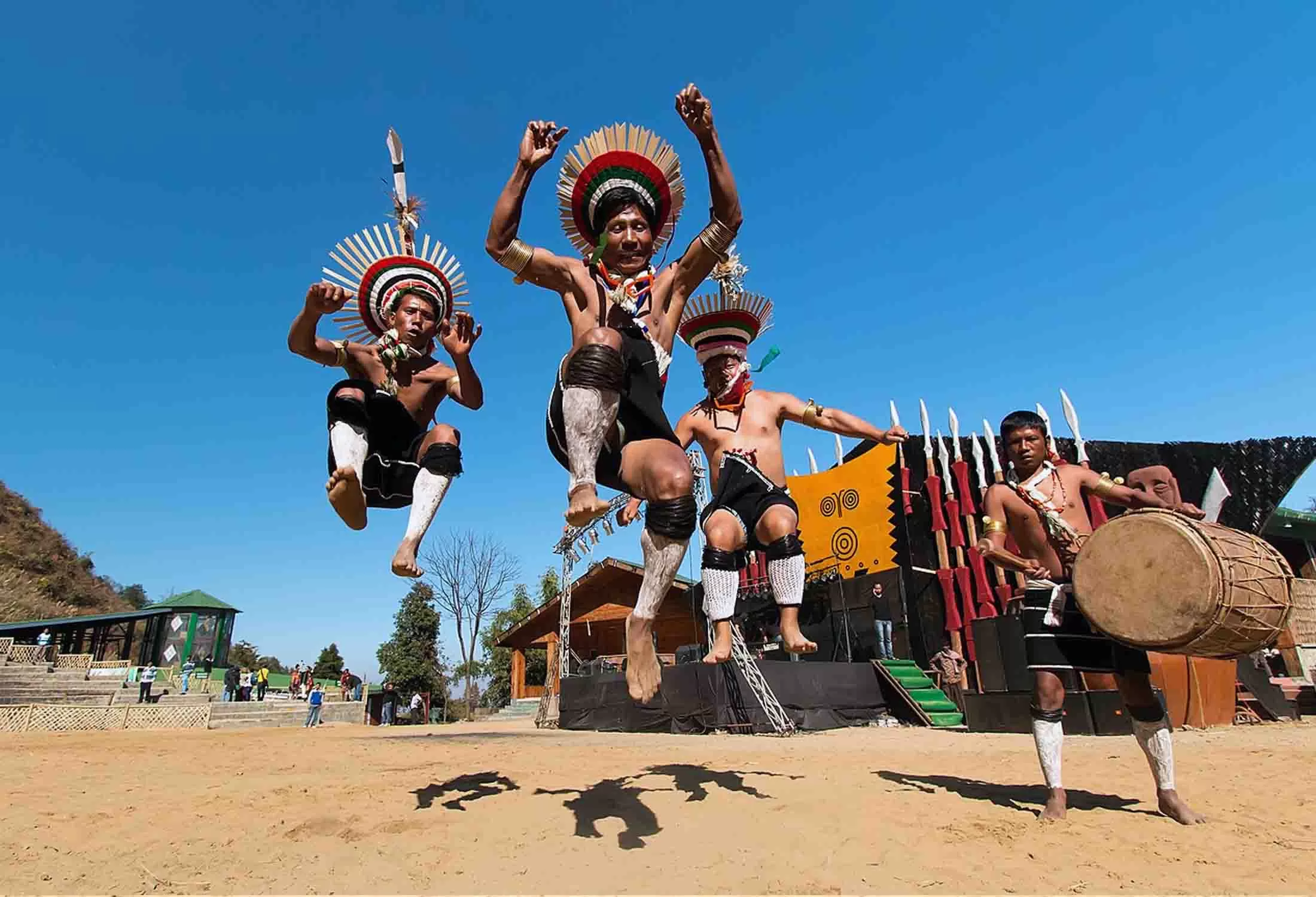
Dance performances are one of the most striking features of the Hornbill Festival. Tribal dances are a living form of oral history. Warrior dance performances are done by tribes like the Konyak, Angami, and Sumi, they are dramatization of the headhunting raids, a practice which is crucial to Naga life culture. They depict Naga courage and the fierce defensive spirit of the community. Dancers wear hornbill feathers, boar tusks, and cowrie shells to signify bravery. The dances are performed with the accompaniment of traditional drums and bamboo flutes accompany rhythmic chants. These dances aim to glorify the sacrifice and courage of the collective Naga tribes.
Afterwards, harvest dances are performed, agriculture is the main source of livelihood for majority of Naga society, and harvest dances celebrate the blessings of mother nature. Tribes such as the Ao, Lotha, and Chakhesang perform gratitude rituals where they thank mother earth for sustaining them. They dance in circular movements which symbolize unity and the cycle of seasons. The performers carry paddy stalks, sickles, and baskets which are intended as symbolic tools of livelihood. They reflect gratitude, communal labour, and spiritual harmony with the land.
The younger members of tribes perform graceful love dances that mimic courtship gestures once practiced in village gatherings. They wear bright shawls, bead jewelry, and feathered headgear which highlight tribal aesthetics. The music for these dances is softer and melodic, accompanied by folk instruments like the tati (single-stringed lute) and bamboo pipes. These dances aim to emphasize the beauty, youth, and the preservation of tradition of the Naga people.
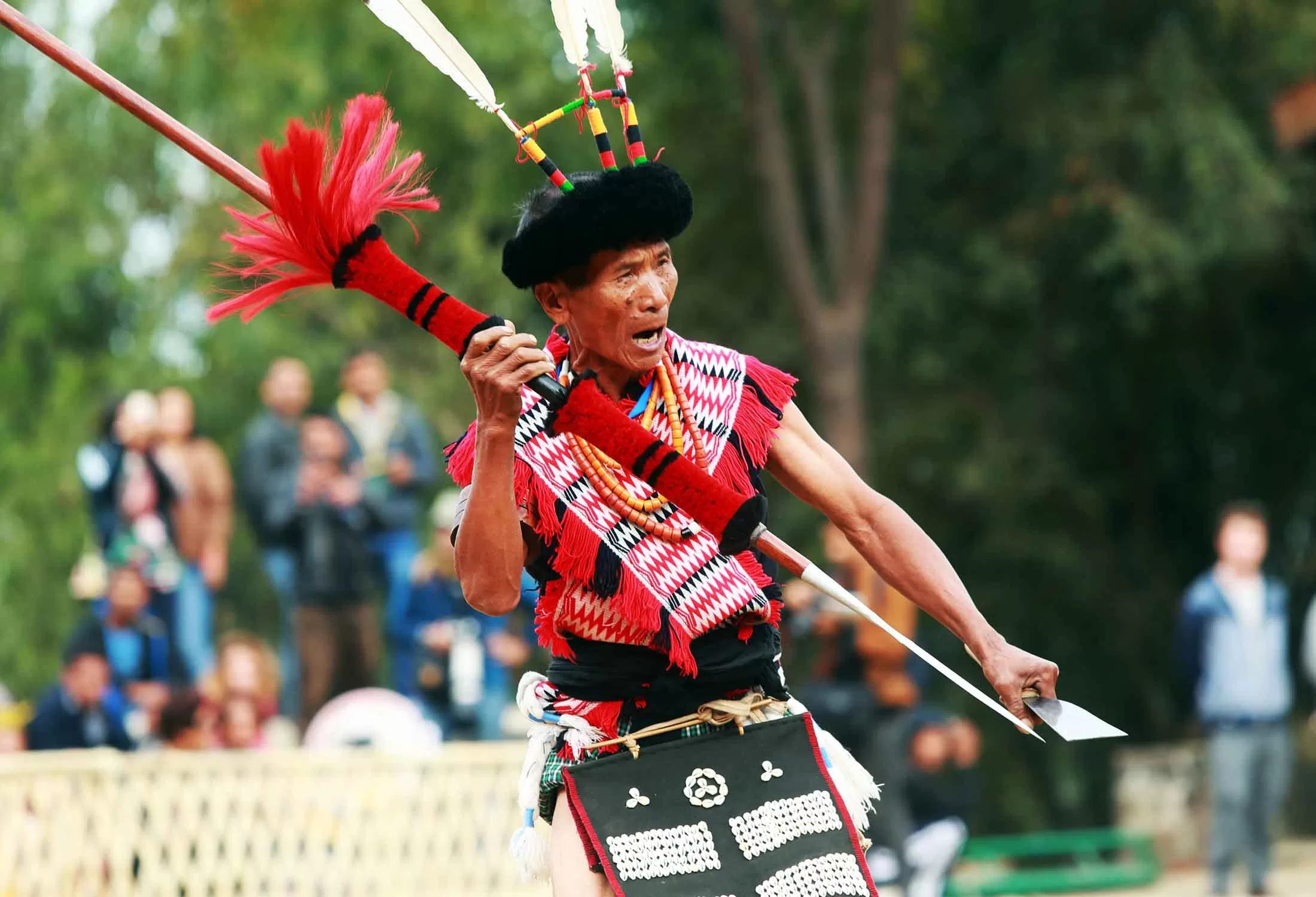
Religious and ritual dances are also a crucial part of these performances, they aim to reenact rituals invoking ancestral spirits. The Chang tribe’s purification dances or Phom tribe’s spiritual chants represent their belief in the balance of humans and nature. These dances remind that Naga culture is rooted in reverence for ancestral spirits.
- Culinary Delights-
If culture has a flavour, you’ll taste it at the Hornbill Festival, where every dish tells a story. Almost every ingredient at the festival such as vegetables, meats, herbs, and grains is locally sourced. The emphasis on sustainability and zero waste is an essential part of Naga tradition. The staples of Naga cuisine are smoked meats, fermented ingredients, bamboo shoots, and fiery chillies, Nagaland is renowned for its Naga King Chili (Raja Mircha), one of the hottest peppers on earth. Each tribe has a different cooking style, but all share the same love for freshness, minimal seasoning and deep earthy flavours. Cooking is still done over wood fires, which gives most dishes a smoky and rustic aroma that defines the culinary signature of the region.
Naga cuisine includes a variety of rice dishes in various forms such as boiled, sticky, or fermented. No Naga celebration is complete without Zutho, rice beer made through natural fermentation. It is a low alcohol drink which is lightly sweet in taste and slightly fizzy. Each tribe brews its own variation-some milder, some with a deeper fermented kick.
 At Hornbill Festival, you must try Axone which is a fermented soyabean dish, it is a pungent delicacy used to flavor meat and vegetables. Another interesting preparation is Galho, Nagaland’s version of khichdi, made with rice, vegetables, and meat or herbs. It’s comforting, simple, and deeply local. For non-veg lovers, the smoked fish wrapped in banana leaves will be an absolute delight. It is cooked directly on fire embers, the fish remains moist and aromatic, infused with the scent of the leaves. Visitors can taste samples from different Morung huts and even watch women prepare the beer in bamboo barrels.
Guided culinary tours by Frontiers Beyond let you experience these dishes with storytelling about the tribe, preparation methods, and cultural significance—making it more than just a meal.
-
Handloom and Handicraft Exhibitions
One of the most vibrant attractions of the Hornbill festival is the handloom and handicraft exhibitions. They are intended to showcase the rich artistic heritage of Nagaland and preserve as well as promote Nagaland’s artistic traditions. These exhibitions showcase the unique artforms of all the 17 Naga tribes, highlighting their cultural heritage through textiles, bamboo, wood, metal, and beadwork. They give the artisans a platform to sell directly to the buyers and promote sustainability. The exhibitions strengthen rural-urban linkage by bringing village artisans to national and international attention.
Each tribe presents its own weaving patterns and motifs, especially the iconic Naga shawls. Common colours are red, black, and white, each representing tribal values such as bravery or purity. This weaving is done on traditional backstrap looms, a method passed down through generations. Naga artisans make shawls, stoles, skirts, bags, and contemporary garments made using local cotton and dyes. Designers often reinterpret tribal motifs for modern fashion lines. Naga tribes such as Ao, Angami, Sema, and Lotha tribes are particularly known for their intricate handwoven shawls.
Apart from this, baskets, hats, and home décor items are made from local bamboo. The Ao and Konyak tribes excel in bamboo weaving. Wood carving is one of the most prominent artforms of the state, Naga wood artisans make masks, utensils, and miniature morungs crafted using local hardwoods. These designs often depict warrior symbols, hornbill birds, and ancestral faces. Travelers can watch artisans weaving or carving in live workshops.
A crucial Naga art form is beadwork and jewelery, artists make mzulti-strand necklaces, waistbands, and headgear crafted from stone, glass beads, and animal bones, symbolizing clan status and tradition. At Hornbill festival, many stalls offer customization or allow tourists to try basic weaving or bead threading. Products are authentic and directly sourced, making them valuable souvenirs.
 Best Time to Visit the Hornbill Festival
The Hornbill Festival is held every year from 1st to 10th December at the Naga Heritage Village, Kisama, about 12 km from Kohima. The month of December is ideal for visitors because the weather is cool, skies are clear, and the hills are alive with the flavours of festivity. Temperatures range between 10°C and 20°C, perfect for outdoor events and exploring Nagaland’s landscapes. If you want to experience the full energy, parades, tribal dances, music nights, and fashion shows, plan to arrive by November 30th, since accommodation fills quickly and traffic restrictions increase once the festival begins.
Traveler Tips
- Book Early-Plan and book your accommodation in advance, as many hotels and homestays in Kohima get fully booked. If accommodation near the Kisama is not available, try accommodations near Touphema, Kigwema, or Jotsoma villages, which offer cultural stays.
- Dress for the Hills- Make sure to carry winter essentials, mornings and evenings are chilly. Layer up with warm jackets, but wear comfortable clothes and shoes suitable for uneven terrain and open-air venues.
- Carry Cash-Digital payments may be unreliable in rural stalls. Carry sufficient cash for crafts, food, and local transport.
- Reach Early-Events begin by 9 AM and the venue becomes crowded by noon. Reaching early helps you find a good spot for performances or workshops.
- Respect Local Customs-Photography is allowed, but always ask before clicking tribal performers or entering morungs. Avoid interrupting ceremonies or rituals.
- Try the Local Cuisine-Sample bamboo shoot curry, sticky rice, axone (fermented soybeans), and rice beer (zutho). Food stalls also serve vegetarian options.
- Transport-Taxis and shared jeeps run from Kohima to Kisama during the festival. Roads are hilly, so allow extra time for travel.
- Stay Hydrated and Eco-conscious-Carry your own water bottle. Dispose waste responsibly; the festival emphasizes eco-tourism and cultural respect.
- Plan Extra Days-Extend your trip beyond the festival to explore Dzukou Valley, Khonoma Green Village, and Japfu Peak, these locations are ideal for trekking and nature photography.
Experience the Spirit of Nagaland with Frontiers Beyond
Don’t just watch the Hornbill Festival, live it. Take a stroll through the morungs, immerse yourself into Naga music, savour smoky Naga cuisine, and witness centuries of tradition reborn each December. With the seamless travel management of Frontiers Beyond, be prepared for a seamless journey from your arrival in Kohima to the heart of Kisama Village. Our expert guides, local connections, and customized stays ensure that you don’t miss a moment of Nagaland’s most iconic celebration. Step into a world where heritage, rhythm, and colour meet.
Book your Hornbill Festival experience today-and travel beyond the ordinary with Frontiers Beyond.